September 2026
From Detroit to Tashkent to Istanbul: Three Mechanisms of a Creative Ecosystem
A creative director's field report on how talent, institutions, and markets interact across three different cultural environments.
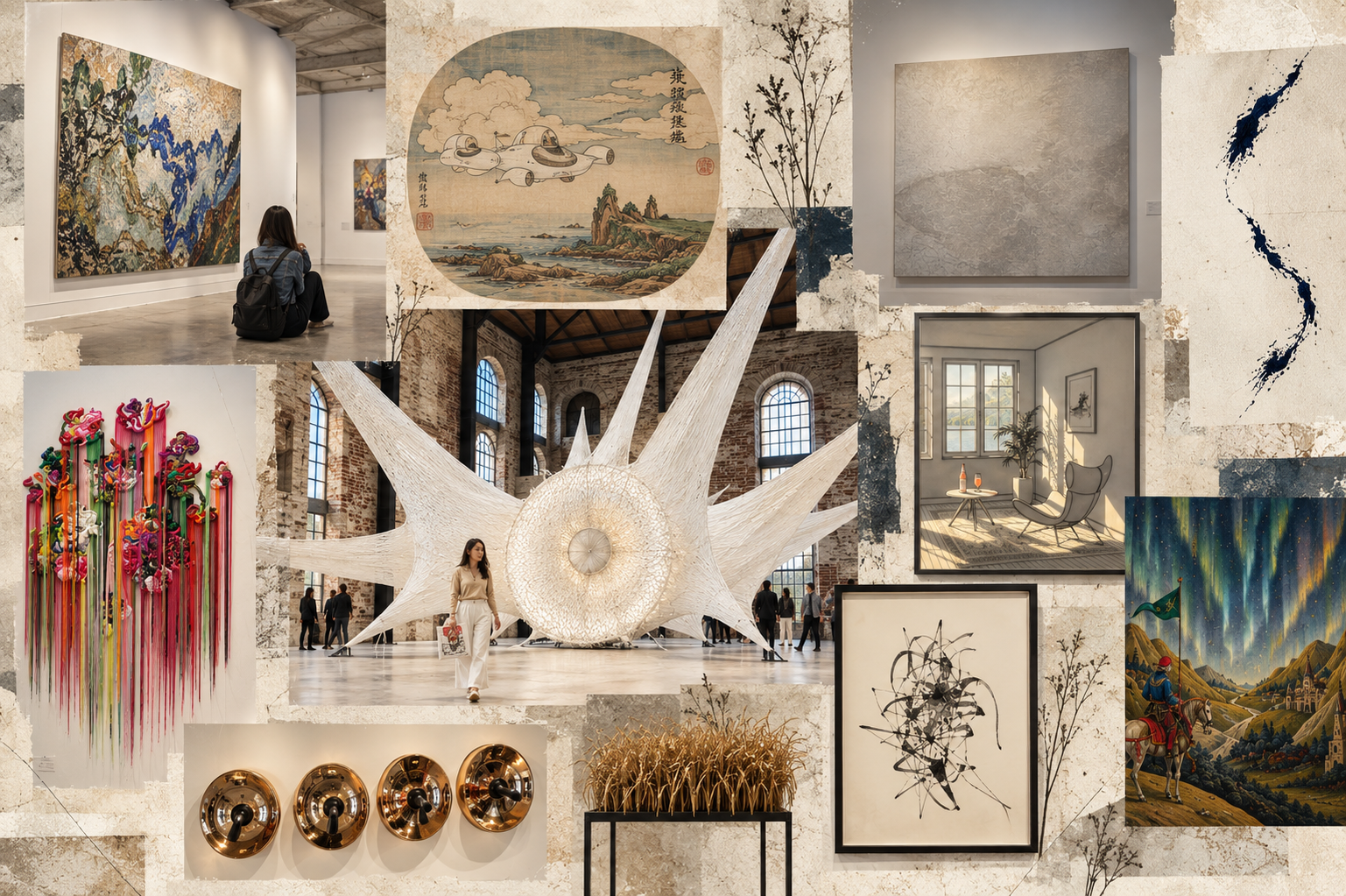
This is not a comparison of three economies. What caught my attention were three different mechanisms behind the growth of a creative environment: support for professionals, institutional infrastructure, and market access.
In the span of one month, I had the chance to see all three mechanisms in action. For fifteen years I have helped creative professionals grow, and helped businesses and founders build value through strong ideas, projects, and creative decisions.
What helps talent grow, how institutions create value, which works draw market attention, and which visual trends keep resurfacing: this is a field report on the most eventful September in recent memory.
Detroit: An Infrastructure of Recognition
Detroit Month of Design is now in its sixteenth year, held in the only US city with UNESCO City of Design status. In 2026 the program, titled Design Moves the Future, brought together more than 100 events across the city: exhibitions, talks, workshops, tours, and product launches.
Detroit operates on a different scale than global creative capitals like Paris or Los Angeles. That is exactly what makes the role of its professional community so visible.
Design Core describes Month of Design as a mechanism that connects creative professionals with each other and with the tools they need to grow, helping them feel that their voice matters to the city and the industry. That kind of institutional support often counts for more than many other conditions for growth. Systematic recognition builds belonging, loyalty, trust, and the will to keep creating.
Business × Creative Talent
One striking example: the City of Design Talk, Connecting Textile Innovation + Creative Talent, with guests from Kortrijk, Detroit's partner city under UNESCO Creative Cities.
The model is practical. Manufacturers open their materials, technology, and production infrastructure to young designers. Business gains a fresh perspective on product and new ways to apply materials. Designers gain access to a potentially major client and a professional network.
A clear example of how international collaboration connects business with emerging creative professionals.
Tashkent: Renovating Cultural Infrastructure
Tashkent is undergoing a significant renovation of its cultural infrastructure, much of it carried out with the involvement of ACDF, the Art and Culture Development Foundation of Uzbekistan.
The State Museum of History of Uzbekistan reopened after reconstruction. In terms of exhibition logic and how it handles a vast body of historical material, this is an experience I would place alongside the best museums I have visited internationally. Layered history, original artifacts displayed next to reconstructions, and a modern exhibition logic spanning from antiquity to independent Uzbekistan create a rich museum experience. It carries particular weight to see your own country's history documented and presented at this level, when you grew up inside that culture and are part of it yourself.
CCA Tashkent, the Centre for Contemporary Arts, I remember from its earliest stage of reconstruction. More important than the building itself, designed by the Paris-based studio Studio KO, are the programs and partnerships built around it. The centre functions as a base: international projects, residencies, educational programs, professional exchange. A new generation of creative professionals gains access to experience, working methods, and an international professional environment.
Istanbul: Art as a Market
The 21st edition of Contemporary Istanbul at Tersane Istanbul offered a chance to see an international art market in action and to study its visual trends: 70 galleries from 16 countries, 736 artists, 1,372 works, and 22 galleries taking part for the first time.
For the first time, I saw this many international gallerists in one place, from Asia and the Middle East to Europe and the United States. For three days my mind was breaking down visual information pixel by pixel.
Here are the recurring visual trends I noted at the fair:
Miniature painting. Contemporary reinterpretations of the traditional miniature.
Contemporary tapestry. Traditional techniques recontextualized within contemporary art.
Blue plus black. Red plus black. Silhouettes and gradients.
Sensuality plus plastic. Surfaces that read almost physically: wet plastic, droplets, transparency, materials that imitate water. Open femininity, vulnerability, corporeality.
A return of 2010s aesthetics. Dark still lifes echoing the Dutch tradition, female figures and portraits set against black backgrounds.
Ambient and 2000s conceptualism.
For my generation this is especially interesting: much of the visual language we worked with during our studies and early careers is resurfacing in a new market cycle.
Chinese gallery presentations stood out in particular, part of the strategic Focus Asia section, which this year brought together institutions and galleries from across the region. Color, sensuality, a blend of tradition and contemporaneity, and distinctive work with texture. Turquoise, stone, dense painterly surfaces that work on an almost physical level. That combination was one of the strongest visual impressions of the fair.
Alongside the work itself, it is worth watching the infrastructure of the market: artist ↔ curator ↔ gallery ↔ collector ↔ institution ↔ media ↔ market, a network rather than a sequence of steps. A strong visual language is the foundation. But the market demands positioning, a consistent body of projects, professional relationships, representation, and a clear sense of value.
For myself, I gathered these observations into a working formula: Talent → Institution → Market.
For my own work this is a practical map and a constant exercise in visual literacy. These observations shape my own projects and my work with creative professionals: for growth, for building strong projects, for building agencies and professional systems.
If your organization or project sits at any point along this path, from building a team that feels recognized, to translating heritage into an international language, to positioning talent for market, get in touch.
Anna Latkin
Creative Director & Consultant · USA / Central Asia
- Creative Direction
- Cultural Strategy
- Central Asia